EnQS tests bidirectional charging with Quasar

September 22 2021

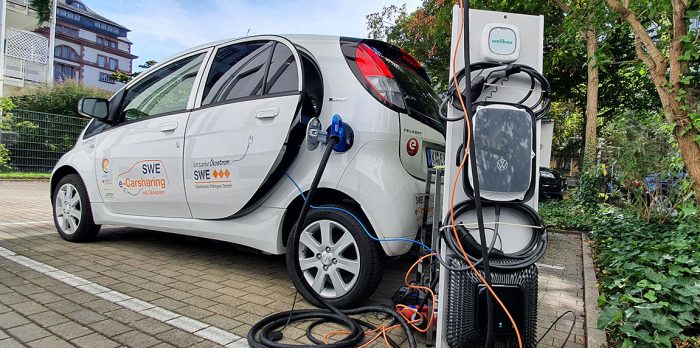
Together with our partner GreenCom Networks AG, we tested bidirectional charging in combination with GreenCom’s energy management system. A wallbox from the manufacturer Wallbox Chargers with 7.4 kW power and the CHAdeMO interface developed in Japan was used. With the DC-coupled system, it is possible on the one hand to charge the vehicle battery with surplus PV power, for example, as well as to use the vehicle’s battery to supply one’s own home.

In this way, PV power can be buffered without the need for an additional stationary battery. One advantage of the DC-coupled system is, that the inverter required for the bidirectional power supply does not have to be installed in the vehicle (weight and space), but in the wallbox.
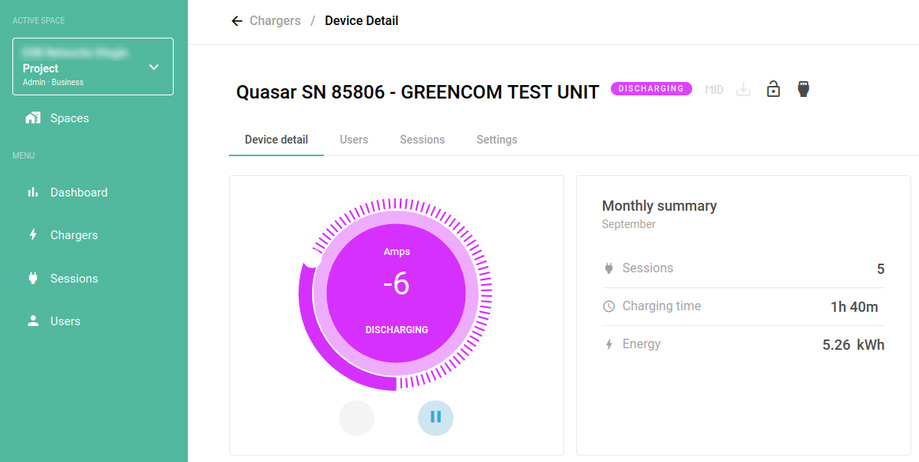
Using a web interface as well as an app from the manufacturer, the power with which the vehicle is to be charged or the house supplied can be set by the end user. Likewise, an energy management system can take over the control of the system and thus optimize the energy flows based on forecasts.

We were able to successfully test the interaction of the DC-coupled wallbox and the energy management system. The counterpart to CHAdeMO is the CCS charging system favored by European manufacturers. This plug can be used to charge via both DC and AC.

< back to overview
Newest articles

Intelligent Storage Heaters: A Flexible Technology for Existing Buildings

Although new buildings are mostly equipped with heat pumps, there are still storage heaters with an installed capacity of more than 20 GW in existing buildings. On behalf of EGH, EnQS has built the EGH platform based on Azure components, which has been optimizing around 3000 connected storage heaters in the field for two years. In the context of dynamic electricity tariffs, smart metering systems and §14a EnWG, considerable flexibility potential can be exploited.

Efficiency Measurements for PV Storage Systems

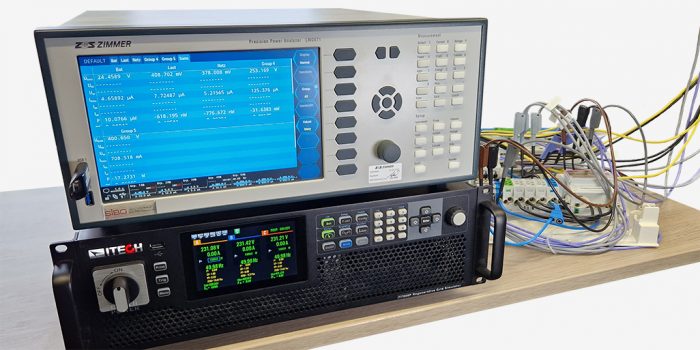
EnQS carries out efficiency measurements in accordance with the efficiency guidelines for PV storage systems. This is a test guideline for characterizing the efficiency, standby consumption and control efficiency of stationary battery storage systems, which are often integrated into home energy management systems (HEMS). In this context, EnQS is expanding its measurement and testing equipment in the EnQS Testlab and thus its portfolio of HEMS-related services.

PPC und EnQS integrieren EEBus auf CLS Gateway

In cooperation with PPC, EnQS has fully integrated and tested the EEBus communication standard on PPC’s CLS Gateway. In the long term, this will enable properties to establish standardized communication with numerous applications and devices.